Therapist In-Person in Chandler & Online Across AZ & HI
Your space for honesty, curiosity, & meaningful change.
Therapist In-Person in Chandler & Online Across AZ & HI
Your space for honesty, curiosity, & meaningful change.
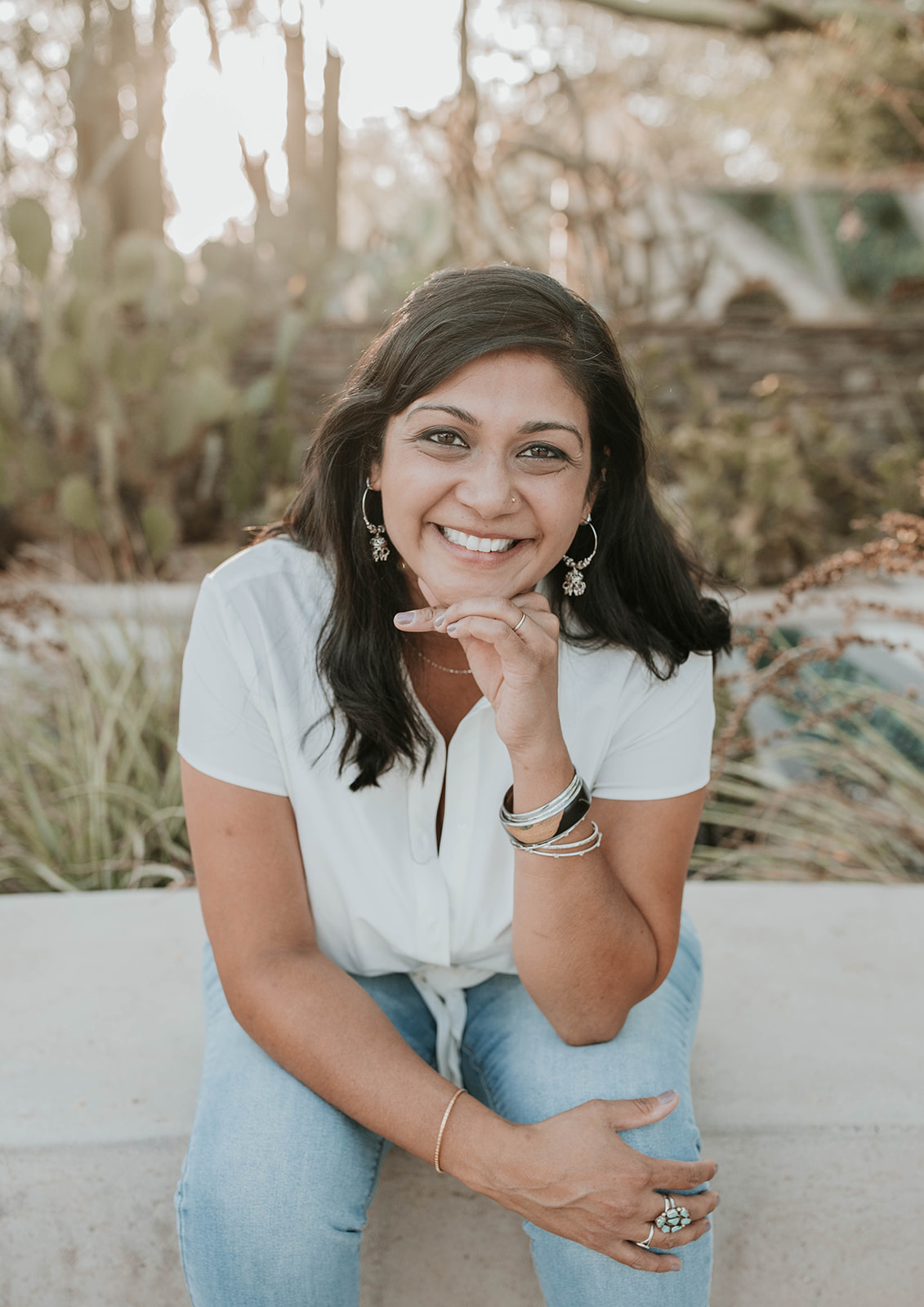
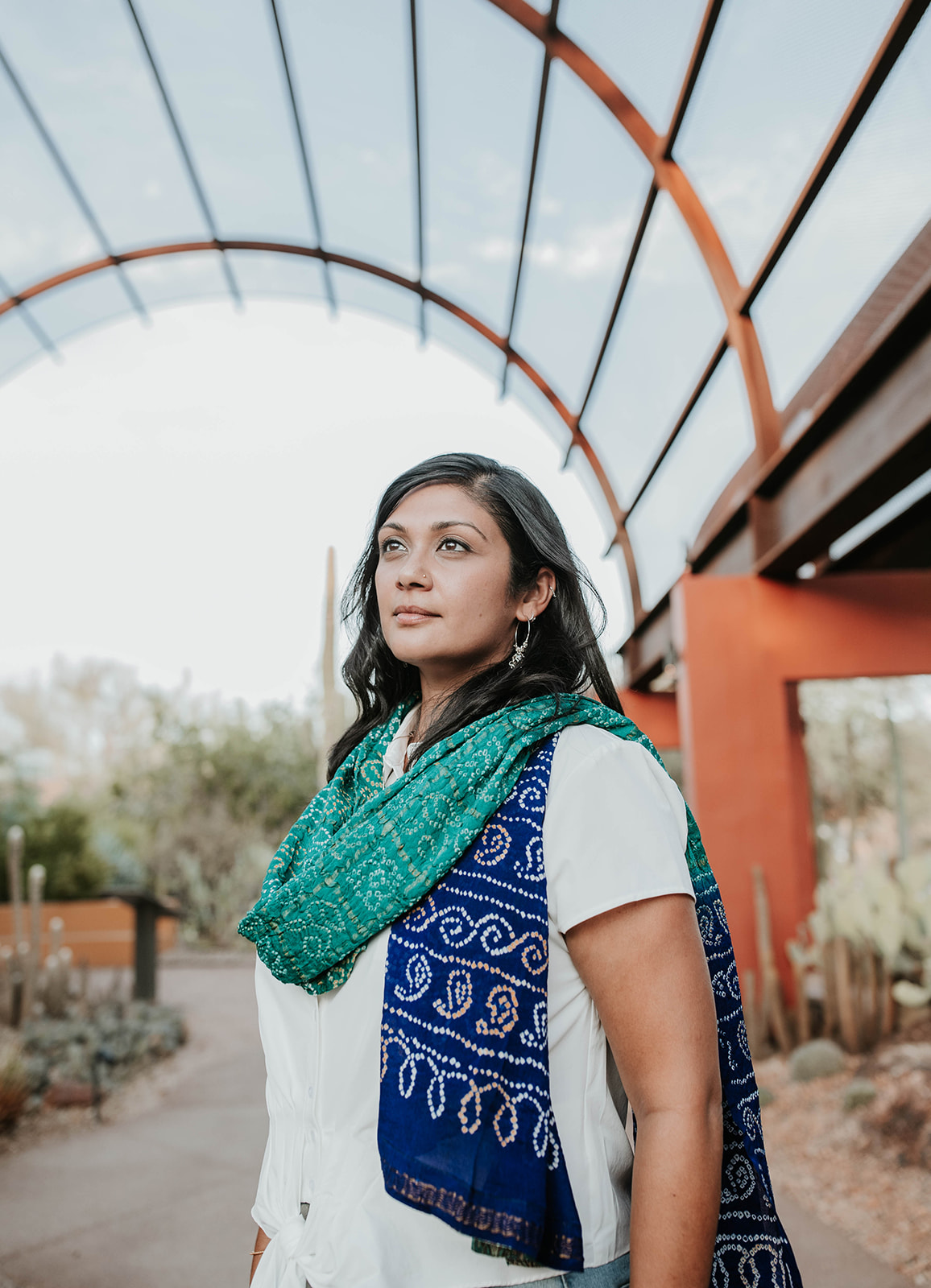
Hi, I’m Reena Patel, LCSW, RYT
If you’re exhausted from walking the tightrope between others’ expectations and what actually feels right for you… I get it.
Most people don’t come to therapy on a whim. They come after a moment, a decision, or a life change that makes it impossible to keep moving the same way they always have.
I know firsthand how unsettling (and let’s face it, sometimes terrifying) it can be to reach a point where the old ways of being no longer fit, but the next steps aren’t yet clear—and that lived understanding shapes how I show up in this space.
Even if things look “fine” on the outside, you might feel unsure, off-balance, or at a crossroads, knowing something needs to change without knowing exactly what or how. That’s okay—our work begins by meeting you right there.
Here, your inner compass guides everything we do.
You may have spent years of your life overriding your own instincts—second-guessing yourself, deferring to others, or ignoring the signals that something doesn’t feel right. My approach is rooted in the belief that you already carry an internal sense of knowing, even if it’s been buried under fear, obligation, or self-doubt.
In our work together, we pay attention to moments when things feel settled or unsettled, constricted or spacious, and use those cues as invaluable information rather than seeing them as something to push through. Over time, this helps you rebuild trust in your own judgment and make choices that feel intentional and true to you. You might hear me say, “We’ve got this until you’ve got this.” That means that even if you don’t know where you’re going yet, you can trust that I’ve walked with countless folks who are on a similar journey here, and I’ve seen so many through to the other side of this work. I hold an unwavering belief that we can find our way—until you believe it, too.
Beyond any external goals you might be aiming for, the most meaningful part of this work is learning how to listen to yourself again.
In therapy with me…
You always have a choice.
Choice is not something I take lightly. In our work together, you’ll be offered options—not directives—and you’re always encouraged to say yes, no, or not yet. That might look like choosing how deeply we go into a topic, or deciding whether we talk things through, engage with what your body is feeling, or explore something more experiential like yoga or equine-assisted sessions. My hope is that having your choices respected here can make it easier to trust yourself and take up space in your life beyond therapy.
We build a real, honest relationship.
The relationship we have in sessions matters, because it’s the foundation of all the work we do. I don’t see therapy as a place where I hold all the answers and you adjust yourself to fit them—I’m intentional about our dynamic and always stay open to learning from you. I show up as a real human: curious, honest, and deeply invested in helping you make the changes you want to make. If something doesn’t feel helpful, if you disagree, or if you notice yourself people-pleasing with me, that becomes part of the work and we’ll talk about it.
It also means that if you share something meaningful to you, like a book, a practice, or a way of understanding your experience, I take that seriously and do my own work to understand it outside of our time together. I want to really get where you’re coming from, and I believe your perspective is just as important (if not moreso, since you’re the expert on your truth) as my own.
Understanding your inner workings changes how you relate to them.
Maybe you’re at a point of being confused or angry about your own feelings, thinking “Why do I react this way?” or “Why can’t I just move on?” A big part of our work is making sense of what’s happening for you by learning, together, about things like stress responses, patterns shaped by past experiences, and how your body and mind have adapted to get you through hard things.
I’m big on sharing this kind of information in a way that feels accessible and grounding, because understanding why something is happening often brings relief, reduces shame, and can empower your sense of choice. When your experiences are named and normalized, your reactions start to feel less like personal failures and more like information you can work with.
My most influential mentors and teachers have taught me to think about the nervous system like a garden. What we pay attention to grows. The first thing we must pay attention to in this work is our body. In the past, your nervous system may have been trying to survive in an environment that felt out of your control. When life has been overwhelming or painful for a long time, certain “weeds” can take over—old survival patterns, stress responses, or habits that once helped but now feel exhausting.
In our work together, we’re not trying to rip everything out or force the garden to look a certain way. We spend time tending to it—planting what you want to grow, nurturing what already has strength, and making room for more capacity over time. The weeds may not disappear completely, but you can still have a garden that’s beautiful, nourished, and worth maintaining. The soil inherited from our ancestors has the strength to hold both.
Access to community spaces called Tending Circles along with 1:1 therapy to practice useful tools in your daily life
I don’t believe in gatekeeping wellness. I believe mental health is health, and a human right. What we talk about and practice in session is meant to support you in your real, everyday life—not just while you’re sitting with me. I love teaching folks what I’ve learned about the science of change and how this can be applied within our own lives.
Early on, I share practical tools you can use between sessions and practice in community through weekly 30 minute Tending Circles to help you feel more steady, grounded, or resourced when things get hard. These are skills I use myself and offer in abundance, so you can decide what fits, what doesn’t, and how to make them your own. I also encourage you to share these skills with family and friends, and you’re even welcome to invite them to share a session with you if you think it’d be helpful, so we can mutually expand the wellness within your community.
Traditional therapy models begin and end emphasis on the 1:1 therapy space. I created Tending Circles as a practice space to tend to your flame internally with whatever is being sparked in therapy, or tending your nervous system garden with consistency so you can experience the changes you want to see in less time. In 1:1 therapy we are pulling the weeds, and in the Tending Circle we are watering (or paying attention) to what also is true about your lived experience and well-being. This is not group therapy, and more like a space practice and deepening what you are working on. This is how people have naturally practiced healing across cultures and time.
In the Tending Circle we practice neuroscience-backed somatic skills, self-compassion practices, and guided parts work through yoga, meditation, art, writing amongst other methods.
Progress happens in layers, not straight lines.
Change rarely happens all at once, and I don’t expect it to. I think of this work as moving through three overlapping, non-linear phases that clients often revisit at different points in their lives:
- Raising consciousness—building awareness of patterns, nervous system responses, and the systems that have shaped your experience through the lens of intersectionality..
- Disrupting cycles—experimenting with new boundaries, choices, and ways of relating that align more closely with your values.
- Embodying change—integrating these shifts so they feel lived, practiced, and sustainable over time.
This framework honors that growth is ongoing, and that coming back to therapy can be a sign of deepening, not starting over.
You, me, and the work we do together all exist in a cultural context and community—and I integrate that in my approach.
Much of my work has been with immigrants, people of color, and folks who identify as women and gender-aligned or non-binary in both clinical and community-based settings. This includes a wide variety of religious and spiritual experiences that are embedded into the cultural lived experiences of many immigrant communities and the diaspora. Working with these communities shapes how I understand survival and strength, which is why I see people in context—within their families, cultures, histories, and the systems they’ve had to navigate. Many of the struggles you’re experiencing make sense when we name the pressures, expectations, and inequities you’ve been living with. But just because your experience makes sense, doesn’t mean the systems creating that struggle do—and I am not a therapist who’s going to tell you to work harder to adjust to a toxic system.
Therapy with me is a space where you’re allowed to question what you’ve been taught, name what has been harmful, and reclaim what you want to keep. Holding this broader lens makes it easier to release shame and creates room for healing that feels both personal and expansive. I believe that this work is a gift you can give not only yourself, but to the generations before you who didn’t have the space to heal, to the generations after you, and to your community as a whole.
I specialize in…

I believe in many access points for mental health—even if we can’t work one-on-one together.
Not everyone who resonates with this work is in a position to start individual therapy right away, or wants individual therapy and I don’t believe that should be a barrier to support. Alongside 1:1 sessions, I offer community-based groups, workshops, and community sliding-scale options designed to make these tools and conversations more accessible.
This practice is anchored in a commitment to always work towards liberation and wellness for our community at large. That’s why I named my practice Rising Embers—because igniting the courage within yourself can create a spark to help ignite courage and change throughout our communities. I volunteer my time teaching and providing services pro bono in the community, supporting this practice means you are also part of making this happen.
These spaces are an invitation to learn and unlearn, practice, and connect with others who are navigating similar questions around stress, identity, boundaries, and change. Whether or not we ever work together individually, my hope is that you leave with skills, language, and a sense of belonging that you can carry with you.
My Background
Education & Licensure
- Masters degree in Social Work from the Tata Institute of Social Sciences, graduated 2009
- Concentration in Women-Centered Social Work and Mental Health
- Licensed in Arizona since 2014
- Licensed in Hawai’i since 2015
Trainings & Certifications
- Trainer for the Trauma Resource Institute: Community Resiliency Model Senior Faculty and facilitator for the Trauma Resiliency Model
- Certified in Brainspotting
- Certified Yoga Instructor from Ignite Institute of Yogic Leadership and Social Change 300 hour training
- Internal Family System Level 1 Trained
- Certified Trauma Resiliency Model Practitioner
- Break the Cycle (BTC) Generational Trauma Therapy Trained
- Ketamine Assisted Therapy Clinician Training at Redemption Psychiatry
- Equine assisted therapy training
Professional Experience
- Experience working internationally in social work settings, with a focus on trauma-informed and community-based care
- Provided trainings in the Community Resiliency Model (CRM) following natural and human-made disasters, supporting individuals and communities in restoring nervous system stability
- Teaching and speaking engagements for university settings and community organizations
- Worked across a wide range of communities, including:
- Housing-first organizations
- Youth and caregivers within the foster care system
- Survivors of gender-based violence, including Military Sexual Trauma
- Indigenous communities in Arizona and California
- Leadership position in an international non-profit
Core Values and Practice Acknowledgements
“If you have come here to help me you are wasting your time. But if you have come because your liberation is bound up with mine, then let us work together.” — Lilla Watson and fellow Aboriginal activists at the 1985 UN Decade for Women Conference in Nairobi, Kenya
- The core values of this practice are compassion, courage, authenticity, innovation and community. I strive to incorporate these values into my practice when making decisions and how I invest my time and resources.
These values are manifested through my offerings and also as I commit to an ongoing process of examining my own positionality and ongoing training and education while providing care based in cultural humility. Rising Embers Therapy & Wellness practice is grounded in an intersectional feminist framework and strives to be a safer space for folks including but not limited to: 2SLGBTQIA+ individuals, people with disabilities, various faith groups and spiritual beliefs, and bodies of all sizes and cultures.
This does not mean I am the right provider for everyone, this does mean if you come across my care in any way, including a consultation, I value creating a space where we invite reflection and integrity to find the best care for you with what you are seeking in this season of your healing journey.
- My office is located on the ancestral and present day land of the O’odham and Piipaash peoples, and virtually extends throughout indigenous land across Arizona and on the land of Native Hawaiians. The history of this place I call home is part of collective, historical and intergenerational trauma for Black and Brown bodies that have (and continue to) experienced violence, slavery and exploitation to create the current economic system in this country. As immigrant settlers from India, my family carries their own legacies of colonial violence to these lands; however, I recognize myself and generations of my family have benefited from the privileges afforded to living in and creating livelihoods in these borders. This is important for me to recognize as someone who specifically works with immigrant communities and intergenerational trauma, the impact of larger social and political factors that are constantly influencing how our individual traumas are connected to global wounding. I am able to do this work because of the legacies and histories of the people and events before me, known and unknown. I strive to do my part to be a good ancestor and a worthy descendant–we have a lot of work to do!
- The teachings of yoga and meditation, as well as many mind body connection practices come from Black and Brown communities. The teachings of yoga specifically come from the area of the world now known as India, and the roots of yoga are transcendent of any religion, caste or school. I strive to educate myself as both a lifelong student and a teacher of this practice towards equity, accessibility and accountability whenever possible. I acknowledge and pay deep respect and gratitude to my teachers of this practice and their teachers for which we have access to these teachings as a path to create liberation for self in service of humanity.


ignite your courage blog
Explore the Blog
Thoughtful reflections on trauma, identity, relationships, nervous system care, and healing within the context of culture, family, and lived experience.

First Generation Therapy Seekers
Self-Compassion and South Asian Community
Multicultural Bodies and Nervous System Work: What’s the Difference?
You deserve to live fully.
Sessions in Chandler & Across Arizona & Hawai’i
